Plantar Fasciitis Treatment in St. Augustine, FL
Plantar Fasciitis Physical Therapy inSt. Augustine, Florida
Do your first steps out of bed feel like stepping on a tack? You hobble to the coffee pot, it eases off a little, then it's right back after a meeting or a long drive. You've tried new shoes. You've tried the inserts. Your heel still hurts.

What IsPlantar Fasciitis?
The plantar fascia is a thick band of tissue that runs along the bottom of your foot, from your heel to your toes. It helps hold up your arch and soak up the force of every step. Plantar fasciitis is when that band gets irritated and sore, usually right where it attaches to the heel. It is known for hurting most with the first steps of the day.
Why Insoles Aren't the Answer
“Insoles cover up the problem. Strong feet deal with it, and then you can wear whatever shoes you want.”
What Plantar FasciitisFeels Like
If three or more of these sound like you, your heel is asking for help.
Brutal First Steps
The first few steps in the morning hurt the most, then it eases a bit.
Worse After Sitting
Stand up after a movie or a drive and the heel pain comes right back.
A Bruised Heel Feeling
It feels like a stone bruise under your heel that never quite heals.
Limping Through the Day
You shift your weight to the outside of your foot just to get around.
Sore After Activity
A walk on the beach or a round of golf leaves the heel aching later.
Hard Floors Hurt
Climbing stairs or walking barefoot on tile makes it flare up.
Why Plantar Fasciitis Keeps Coming Back
Most treatments aim at the heel and stop there. The foot stays weak, the body keeps loading it the same way, and the pain returns.
01
The Heel Gets Sore
Too much load on a foot that isn't ready irritates the tissue at the heel.
02
You Prop It Up
Inserts and cushy shoes ease the pain, but the foot muscles get weaker.
03
Nothing Really Changes
How you walk and stand stays the same, so the heel flares up again.
The way out is feet that can handle the load on their own. Strong, flexible feet you can actually feel, and that is what we build with you.
Plantar Fasciitis Treatment ThatTrains the Foot
We start with the feet, like we always do, then work up the body to find out why your heel is taking such a beating.
Whole-Body Movement Assessment
We map how your foot moves through each step and how your hips and knees affect it, so we find what is overloading your heel.
- Arch Motion
- Heel Strike
- Ankle Mobility
- Hip to Foot Link
Medically Supervised Strength Training
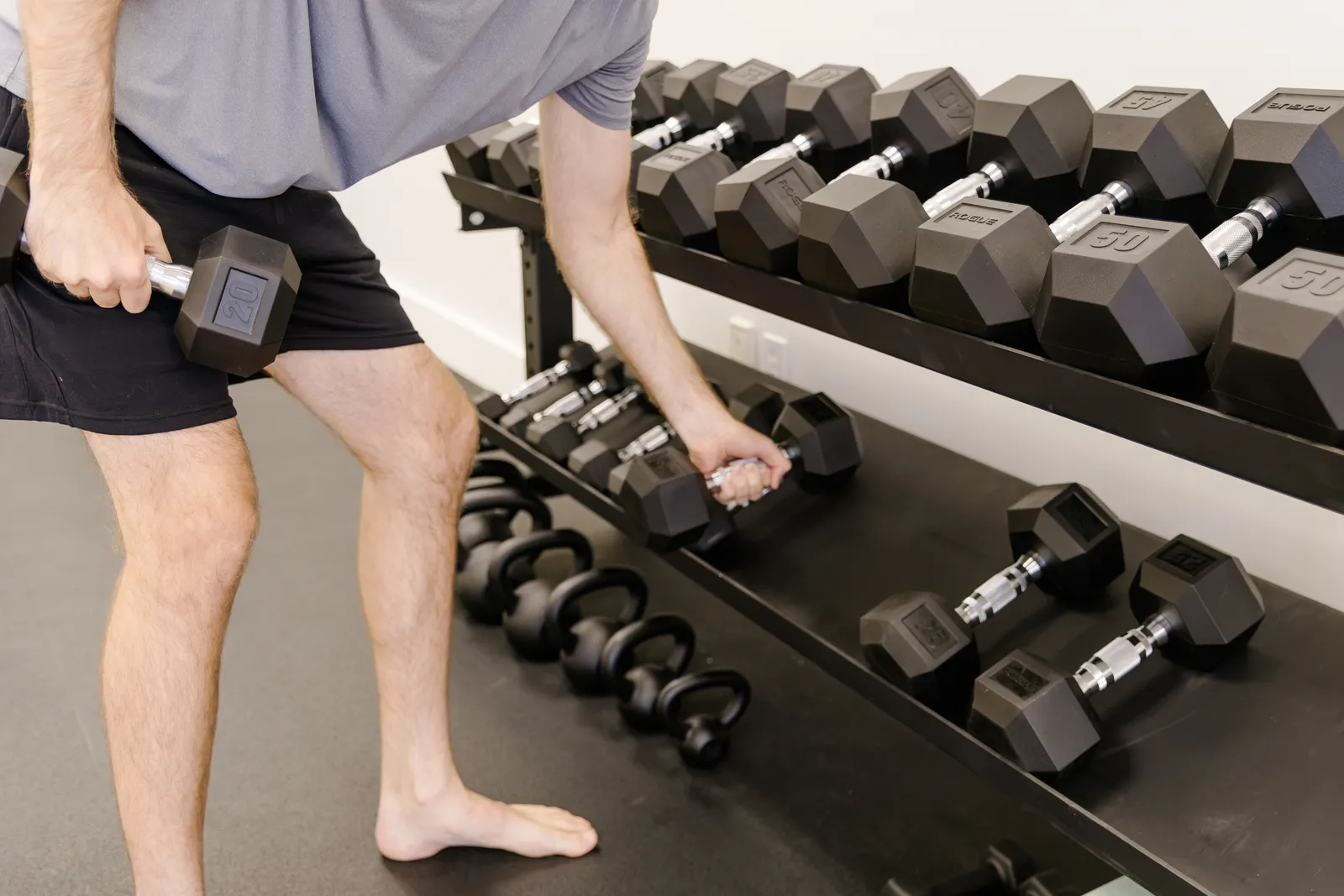
Medically supervised strength training for your feet and legs. We rebuild flat arches, loosen stiff ones and strengthen your calves, so your feet carry you without props.
- Foot Muscle Strength
- Arch Rebuilding
- Calf Endurance
- Balance Control
Gait & Walking Recovery
We watch how you walk, how your heel lands and how your weight rolls forward, then retrain the pattern that keeps irritating the tissue under your foot.
- Heel to Toe Roll
- Push Off Power
- Stride Length
- Walking Posture
Manual Physical Therapy
Hands-on work on the tight tissue in your foot, ankle and calf, so the foot moves more freely and those first morning steps can feel easier.
- Tight Calves
- Stiff Ankle
- Arch Tissue Tension
- Sore Heel Tissue
Frequently Asked Questions AboutPlantar Fasciitis Physical Therapy in St. Augustine, FL
Can physical therapy help plantar fasciitis in St. Augustine?
Yes. At Renew in St. Augustine we examine your feet and the rest of your body to find what is overloading your heel. Then we train your feet to get stronger and more flexible, so they can handle the load on their own.
Do I need insoles or orthotics for plantar fasciitis?
Insoles can ease the pain, but they often just cover up the problem while the foot gets weaker. Sometimes orthotics truly are needed, like after nerve damage or a severe foot injury. Our exam will tell you, and if we can't help, we will say so.
Why does plantar fasciitis hurt more in the morning?
Overnight, the tissue under your foot tightens up while you rest. Those first steps suddenly stretch it again, which is why the pain is often worst in the morning and after you have been sitting for a while.
Will I have to stop walking or running with plantar fasciitis in St. Augustine?
Not always. We usually adjust how much and how far instead of stopping everything, so you keep moving while your feet get stronger. Your plan fits around the walks, runs and rounds of golf you care about.
When should I see a doctor for heel pain in St. Augustine?
See a doctor if your heel pain started with a fall or a hard landing, if you can't put weight on the foot, or if you have numbness, tingling, redness or swelling. Those can point to something other than plantar fasciitis.
Where is Renew located in St. Augustine, FL?
You will find us at 3670 US-1 South, Unit 100, St. Augustine, FL 32086. People come to us from Crescent Beach and Anastasia Island too. Call 904-295-6772 to book your free consultation.


Looking for a Plantar Fasciitis Physical Therapist inSt. Augustine, Florida?
Heel pain makes every errand harder, so we make each visit worth the trip. At our St. Augustine clinic, your first visit includes a treatment session, so you can feel how your feet respond on day one.
- 3670 US-1 South, Unit 100, St. Augustine, FL 32086
- (904) 295-6772
- By appointment.
Proudly serving
- St. Augustine
- Crescent Beach
- Anastasia Island
- St. Augustine Beach
- Vilano Beach
- St. Augustine Shores
- World Golf Village
- Ponte Vedra
- Jacksonville
- Palm Coast
Ready to Get Out of Bed Without Limping?
Let's find out why your heel hurts and teach your feet to carry you again. It starts with a free consultation.
or call (904) 295-6772